
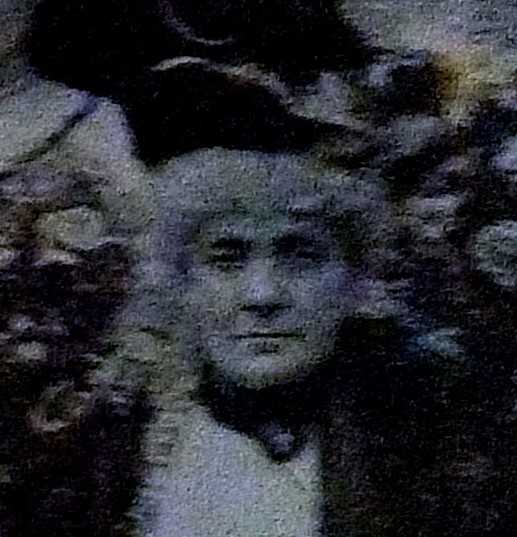
Eliza Burgess (one of 2nd great grandmothers) was born on 18th March 1850 in the village of Flamstead, Hertfordshire, to Thomas Burgess and Elizabeth Gregory, the second youngest of their seven children. Her early years were spent in a rural world that was beginning to feel the squeeze of the Industrial Revolution. In 1851, the year after she was born, the Great Exhibition was held in London to showcase the wonders of a new age, but for Eliza, life was far more traditional. She was baptised on 11th August 1850 at the Wesleyan Chapel in Luton, Bedfordshire, marking her family’s connection to Methodism—a faith that often appealed to the hardworking rural and industrial classes of the time.
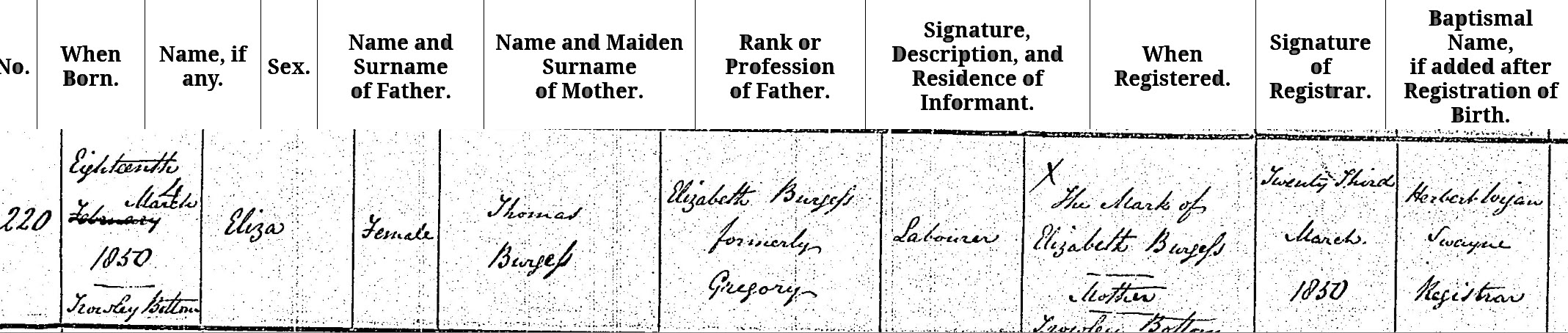
Eliza Burgess birth registration
By the age of 11, Eliza was already contributing to the family income as a “Straw Plaiter”. This was a common cottage industry in Hertfordshire, where women and children would spend their days plaiting straw for the hat-making trade in nearby Luton. It was gruelling work; plaiters often had to moisten the straw in their mouths to keep it pliable, which frequently led to cuts and health issues. By 1871, at age 21, she was still listed as a straw worker.
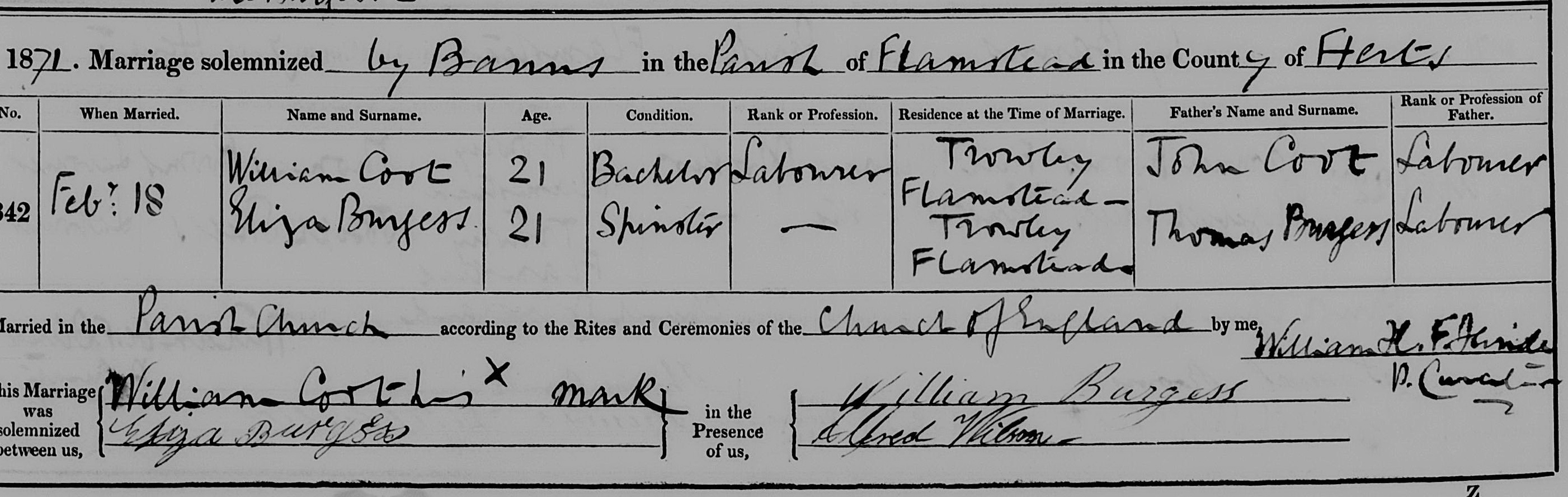
On 18th February 1871, Eliza married William Coot in Flamstead. Both were from families of labourers, and at the time of their marriage, they were living in Trowley Bottom. William was illiterate, signing his name with an “X” on their marriage certificate.
Like many rural families in the late 19th century, Eliza and William eventually left the countryside for the city, seeking better opportunities as agricultural work became scarcer and a decline in the hat making industry because of competition from Chinese imports. They settled in Islington, North London, which was then a rapidly growing suburb.
Eliza’s life in London was filled with the joys and sorrows typical of the Victorian era. She raised several children, including Charles, Bertha, Florence, and Rosey. However, like many mothers of that time, she faced the heartbreak of losing children to the illnesses that plagued crowded urban areas. Her son Thomas died at just three years old in 1879 of meningitis, and her daughter Daisy lived for only a year between 1888 and 1889, also died of meningitis. Later, she endured the loss of her daughter Rosey, who passed away in 1907 at the age of 24 of Tuberculosis.
By 1911, Eliza was 61 years old still living in Islington at 94 Rotherfield Street. She had spent over 40 years married to William, seeing the world change from the slow pace of horse-drawn carriages to the arrival of motor cars and electric lights.
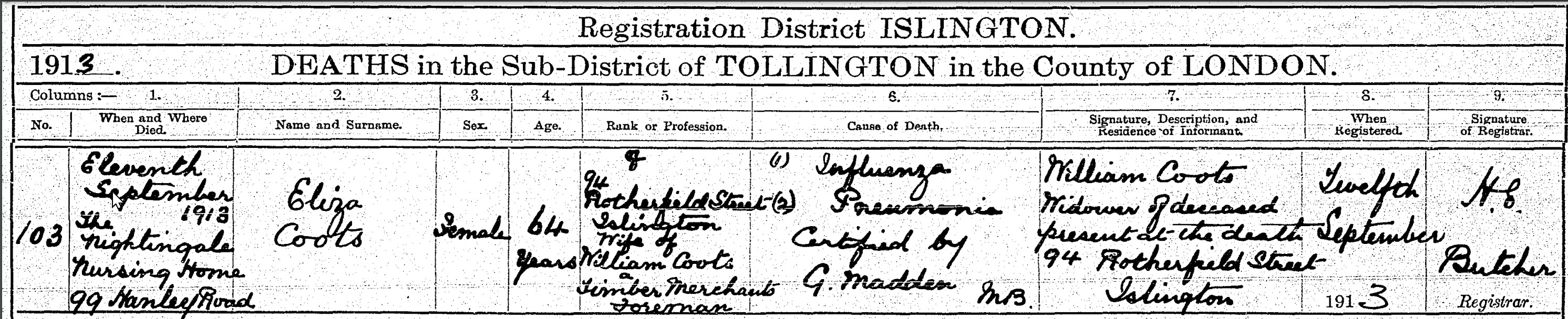
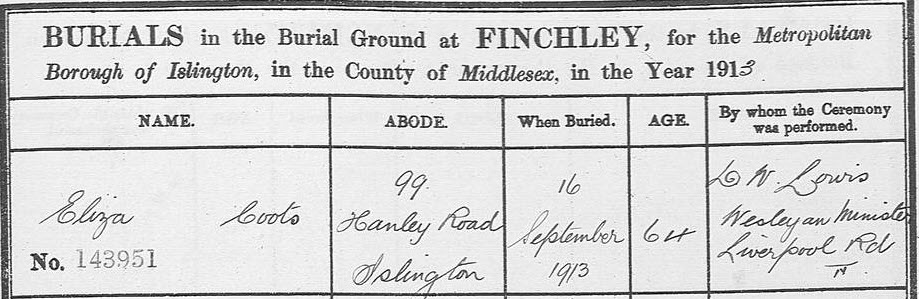
Eliza passed away on 11th September 1913 at the age of 64. Her death certificate notes she died at the Nightingale Nursing Home in Islington from influenza and pneumonia. At that time, before the discovery of antibiotics, respiratory infections were often fatal, even for those in dedicated care. She was buried on 16th September 1913 in The Islington Cemetery in East Finchley, where her children who had died before her were buried. The service was officiated by a Wesleyan Minister from Liverpool Road. She left behind a legacy of a long life lived through a period of immense transformation.
 not just any family