
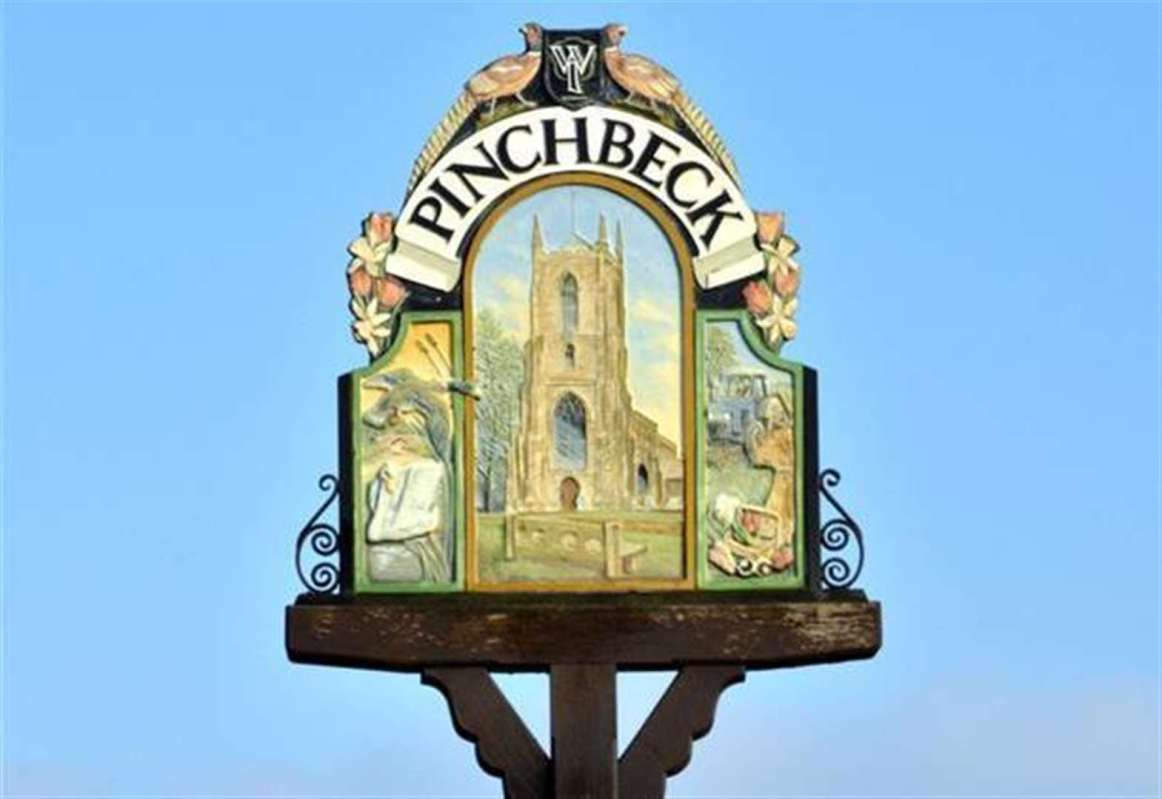
Pinchbeck is from the Old English pinc+bece or pinca+bece, meaning either “Minnow Stream” or “Finch Ridge”. In the 1086 Domesday book, the village is given as Pincebec. from: A. D. Mills, “A Dictionary of English Place-Names,” Oxford University Press, 1991].

It is a most interesting and most unusual surname is of Anglo-Saxon origin, and is a locational name from Pinchbeck, near Spalding in Lincolnshire, which was recorded as “Pyncebek” in 1051 in the Saxon Diplomatic Codex, and as “Pincebec” in the Domesday Book of 1086. The placename is composed of the Olde English pre 7th Century elements “pinc(a)”, a (chaf)finch, and “baece, bece”, a stream. The initial element may also have been the Olde English “pink”, meaning minnow. During the Middle Ages when migration for the purpose of job-seeking was becoming more popular, people often took their former village name as a means of identification, thus resulting in a wide dispersal of the name. The surname itself is first recorded in the early 13th Century (see below), while other early examples include John de Pinchebeke, in the Subsidy Rolls of Leicestershire in 1327, and William Pynchebek, in the Assize Court Rolls of London in 1447. Christopher Pinchbeck (1670 – 1732), a clockmaker, invented a copper and zinc alloy called after him, often used as imitation gold. The first recorded spelling of the family name is shown to be that of Walter de Pincebec, which was dated 1202, witness in the “Assize Court Rolls of Lincolnshire”, during the reign of King John, known as “Lackland”, 1199 – 1216. Surnames became necessary when governments introduced personal taxation. In England this was known as Poll Tax. Throughout the centuries, surnames in every country have continued to “develop” often leading to astonishing variants of the original spelling. From: https://www.surnamedb.com/Surname/Pinchbeck
My paternal Granny was born May Pinchbeck in 1907 and the earliest Pinchbeck I have in my tree was Thomas Pinchbeck died in approximately 1539.
Of my 265 ancestry DNA matches (4th cousin or closer) 60 are Pinchbeck DNA cousins, the DNA must be very strong ! In the 1841 only 122 people recorded with the name Pinchbeck, and 3 on the US 1840 census, so it is not a very common name.
I have started a OneNameStudy of the name Pinchbeck as I think I am possibly related to all of them, do we all share the same Grandparents ?
Some more well known Pinchbecks (have a Wikipedia entry!) include:
Sir Thomas Pinchbeck, Sheriff of Lincolnshire (c.1440-bef. 4 Nov 1492) was the son of Richard Pinchbeck and Margaret Tailboys. He married Anne Greene, daughter of Sir Thomas Greene, Sheriff of Northamptonshire and Marina Bellers, c. 1468; They had 2 sons (Thomas; & Sir John) & 1 daughter (Elizabeth, wife of John Hardwick, Gent.) – yet to be proved as my family

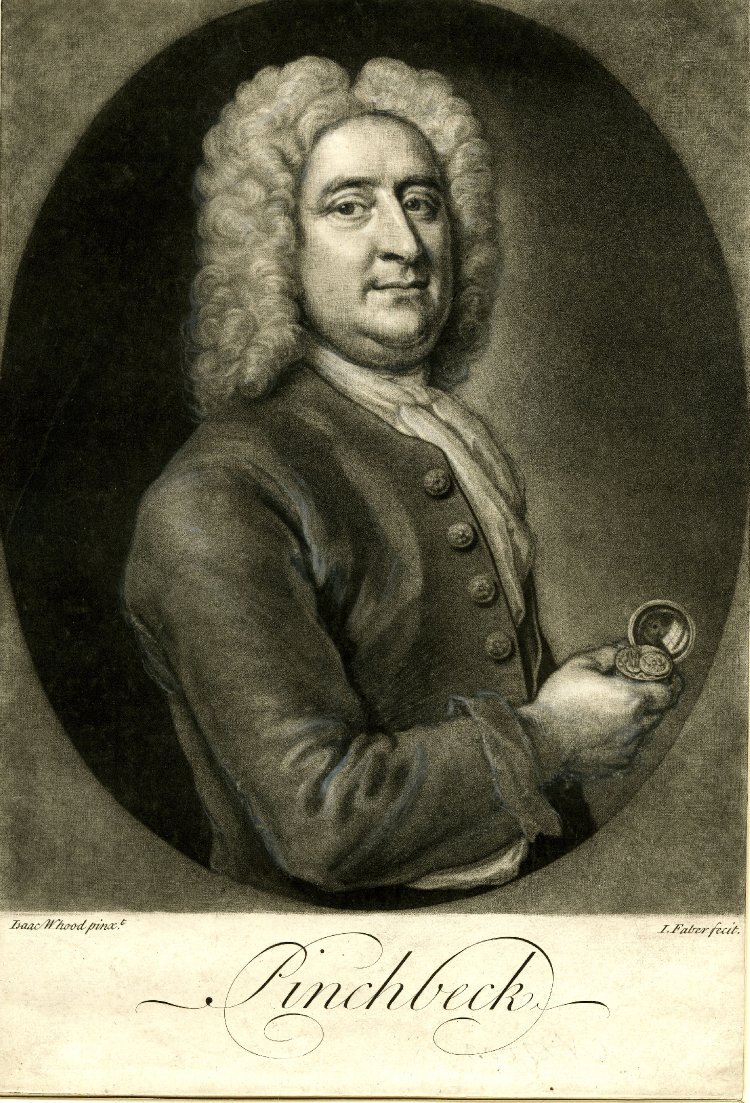
Christopher Pinchbeck b. 1650 , a watchmaker responsible for the invention of the Pinchbeck alloy, which was once used for imitating gold in cheap jewellery. The family specialised in complicated astronomical-musical clocks. He exhibited his clocks in various fairs and invented a metal with the appearance of gold. This, known as ‘Pinchbeck metal’ was an alloy of three parts zinc to four parts copper. Watch cases are frequently made of the metal. Edward Pinchbeck, second son, succeeded to his business and continued with complicated and musical clocks. The elder son, Christopher Pinchbeck, continued on his own and supplied a complicated astronomical clock to George III in 1765. This clock is still in Buckingham Palace. – yet to be proved as my family
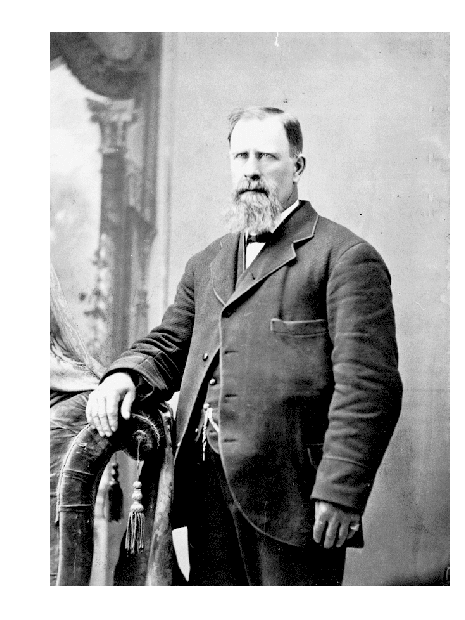
William Pinchbeck (1831 – July 1893) was one of the original settlers in the Cariboo region of British Columbia, Canada. He was a member of the British Columbia Provincial Police and owned a roadhouse and many other properties in Williams Lake, British Columbia. I have written about William in another blog. William Pinchbeck of Williams Lake, British Columbia, Canada – my 1st cousin 4x removed
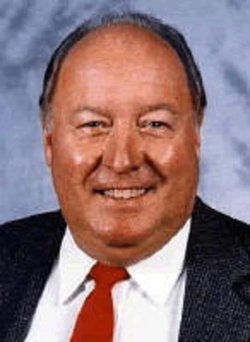
Lastly Valjean Arthur Pinchbeck, a sad story, he was born on February 16, 1931, in Syracuse, New York. Best known as an NFL broadcast official, he was known for organising the NFL schedule annually, he died while crossing a Manhattan street and subsequently hit by a cab, he was pronounced dead at the scene, in March 2004. He was my 2nd cousin 1x removed, we shared great grandparents Joseph Pinchbeck & Mary Alice Sellars that I wrote about in my first #52Ancestors blog, a Fresh Start a Fresh Start – 52 Ancestors in 52 Weeks.
 not just any family
“During the Middle Ages when migration for the purpose of job-seeking was becoming more popular, people often took their former village name as a means of identification, thus resulting in a wide dispersal of the name”. THis belief has been proven untrue. A surname that originates from a manor, as Pinchbeck was (a manor), belongs to a descendant of the manor-holders. People were fined if they used a manorial surname and could not prove relationship to the family. Anyone with the surname Pinchbeck is, therefore, descended from the manor lords. How exactly will generally be impossible to prove, as those with some money could move without problem. So they may have gone to a nearby centre to seek work if they were a younger son or descended from a younger son and no one would have questioned them. Those who could not support themselves (usually the descendants of serfs/commoners) would be sent back to their original parish as late as the 16th C. Lincolnshire dwellers have always been less likely to have moved far. THus, I have been able to trace some of my lines (such as the Langtons of Langton by Spilsby who still hold their manor to this day) back to the original manor holders, together with a number of Langton descendants. My Pinchbecks come off the Langtons via the Quadrings. I suspect that, in the long run, the Pinchbecks ran out of male descendants on the main line fairly early, probably before the 14th C, as there are no mentions of the main line after this time. It would be nice to be able to link the various branches, but, without church records (before 1500s), we won’t get far. However, hope springs eternal. Cheers Sue Scarcella Alexander Langton – WikiTree Profile
LikeLike
Hi there, my name is Kaz (Karen) Pinchbeck, my ancestors originate from Brigg in Lincolnshire. I wonder if we are related?
LikeLike